
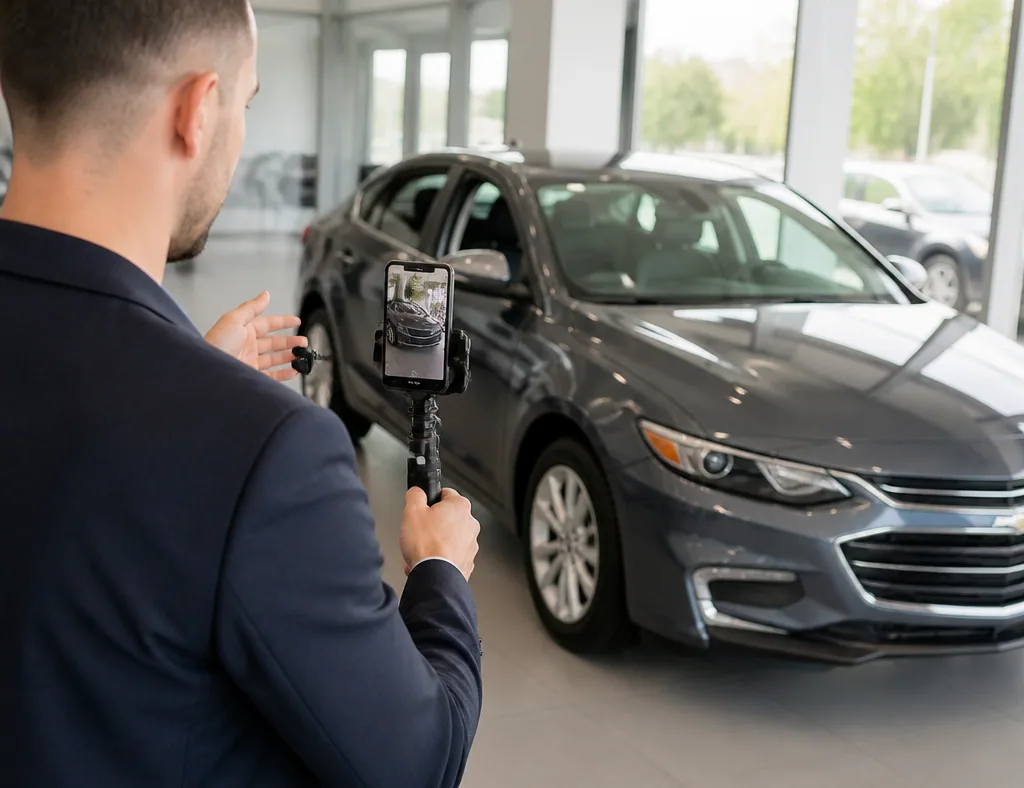
Open with the buyer’s question
A vehicle video does not need a dramatic introduction. Start with one useful promise: “Here is where the rear-facing car seat fits,” “This is the cargo opening with the seats up,” or “These are the two controls buyers ask us about.” A specific question gives the viewer a reason to keep watching and helps the salesperson stay focused.
Do not promise a feature before verifying the exact year, trim, and equipment. If availability or an advertised detail changes, update or remove the post. A clear, accurate opening earns more trust than a broad claim such as “the best SUV on the lot.”
Use a simple four-shot outline
A phone and a clean lens are enough to start. Keep the camera steady, face toward available light, and record vertical footage when the intended destination is a vertical-video feed. Capture room tone or a clean spoken explanation so viewers can understand the video without relying on a trending sound.
- Hook: name the buyer question or the vehicle detail being shown.
- Context: show the model, trim, and a wider view so the shopper knows what is on screen.
- Proof: demonstrate the feature in use rather than only describing it.
- Next step: invite the viewer to see the full listing, ask a question, or book a visit.
Make the clip useful, accessible, and honest
Add readable captions for spoken information, keep text away from interface controls, and use a clean frame that does not hide the vehicle. Avoid placing important details only in a fast-moving overlay. If the clip uses music, confirm it is allowed for the account and type of use; platform music libraries and commercial-use rules can differ.
Show the car as it is. Disclose that a vehicle is used, show material wear when it matters, and avoid edits that misrepresent its condition. Ask permission before featuring a customer, and do not display personal information on paperwork, screens, or license plates.
Learn from retention and the next action
Do not use views as the only score. Compare the opening, average viewing behavior, saves, comments, profile visits, link taps, and inquiries where those metrics are available. A clip with fewer views may still be more valuable if it attracts a relevant buyer question.
TikTok’s automotive creative research discusses relatable people, real vehicle details, and direct calls to action in an advertising context. Those are sensible creative ideas to test in organic videos, not a promise that an unpaid post will receive the same distribution or results.